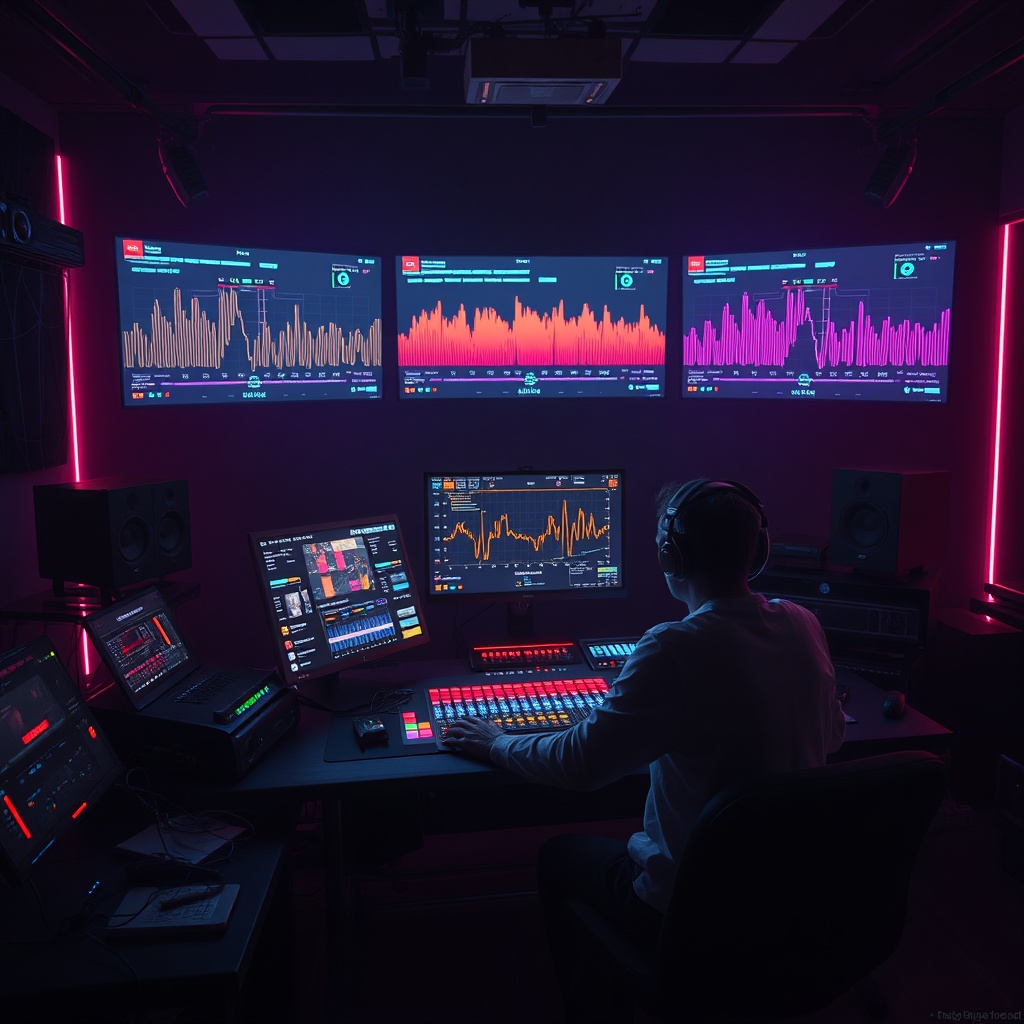
Getting your music onto streaming platforms is one of the most important steps in building an audience as an independent musician. Digital distribution is the process of delivering your finished recordings to streaming services like Spotify, Apple Music, Amazon Music, YouTube Music, Tidal, and dozens of other platforms where listeners discover and consume music.
Unlike the traditional music industry where getting a record deal was the only path to distribution, independent musicians now have direct access to every major streaming platform through distribution services. This guide explains exactly how the process works, compares the major distribution options, and helps you make informed decisions about releasing your music.
How Music Distribution Works
The streaming platforms that listeners use, Spotify, Apple Music, YouTube Music, and others, do not accept music directly from individual artists. Instead, they work with distributors who serve as intermediaries between artists and platforms.
A distribution service takes your finished audio files, artwork, and metadata and delivers them to every streaming platform according to each platform's technical specifications. The distributor also handles the collection of royalties from each platform and pays those earnings back to you.
The process typically works like this. You upload your master audio files, cover artwork, and release information to your distributor's platform. You select a release date and choose which platforms should receive your music. The distributor processes your files and delivers them to each streaming platform. The platforms review the submission and make your music available to listeners on the release date. As listeners stream your music, each platform calculates royalty payments. The distributor collects these payments and forwards your earnings to you, minus any fees.
The timeline from upload to availability varies by platform and distributor. Most distributors recommend uploading at least two to four weeks before your intended release date to ensure all platforms have time to process and approve your release.
Choosing a Distribution Service
Several major distribution services compete for independent artists. Each has different pricing models, feature sets, and trade-offs. Understanding these differences is essential for making the right choice.
Pricing Models
Distribution services use three primary pricing models. Annual subscription services charge a yearly fee for unlimited releases. Per-release services charge a one-time fee for each single or album you distribute. Commission-based services take no upfront fee but retain a percentage of your streaming royalties.
The right pricing model depends on your release frequency. If you release music regularly, an annual subscription is usually the most cost-effective option. If you release infrequently, a per-release fee may be more economical. Commission-based services have no upfront cost but can become expensive as your streaming numbers grow.
Key Features to Compare
Beyond pricing, several features differentiate distribution services. Platform coverage determines which streaming platforms receive your music. Most major distributors cover all significant platforms, but some smaller or regional services may be missing from certain distributors.
Royalty reporting quality and frequency vary significantly between services. The best distributors provide detailed, real-time analytics showing streams, revenue, and listener demographics by platform. Others provide only monthly or quarterly summaries with limited detail.
Payment frequency and minimum thresholds affect your cash flow. Some distributors pay monthly with low minimums, while others pay quarterly and require higher minimum balances before issuing payment.
Additional features like pre-save campaigns, playlist pitching tools, social media integration, and promotional tools can add significant value depending on your marketing strategy.
Major Distribution Services Compared
DistroKid is one of the most popular services among independent artists. It uses an annual subscription model that allows unlimited releases for a single fee. The platform is known for its speed, with some releases going live within days of upload. Feature highlights include automatic YouTube Content ID, Spotify for Artists access, and team and label plans.
TuneCore offers both per-release and annual subscription pricing. The platform has a long track record and strong relationships with streaming platforms. TuneCore is known for detailed royalty reporting and prompt payment processing. They also offer publishing administration for songwriting royalties.
CD Baby charges a one-time fee per release with no annual subscription. This makes it attractive for artists who release infrequently. CD Baby is one of the oldest digital distributors and covers an extensive network of streaming platforms. They also offer physical distribution for CD and vinyl releases.
Amuse offers a free tier with basic distribution and paid tiers with additional features. The free tier is an excellent entry point for new artists, though it has limitations on release frequency and feature access.
LANDR Distribution bundles distribution with mastering and other production tools. If you already use LANDR for mastering, the integrated workflow can be convenient.
Preparing Your Release
Proper preparation ensures your release goes smoothly and makes the strongest possible impression on listeners and playlist curators.
Audio Specifications
Each streaming platform has specific audio requirements, but your distributor will handle the technical conversion. For the best quality, upload master files in WAV format at 44.1 kHz sample rate and 16-bit or 24-bit depth. This is the standard CD-quality format that all platforms accept.
Ensure your masters are professionally mixed and mastered before distribution. Streaming platforms apply loudness normalization, which means excessively loud masters will be turned down while quieter masters will be turned up. Target an integrated loudness of approximately negative 14 LUFS for the best results across all platforms.
The ShiMuv DAW exports in WAV format at professional quality settings, ready for distribution. Use the built-in mixing tools to achieve a polished mix, and consider the AI analysis features for feedback on your master's technical specifications.
Cover Artwork
Cover art must be a square image, typically 3000 by 3000 pixels, in JPEG or PNG format. The artwork should be original and should not contain social media logos, website URLs, or any text that could be confused with platform-specific branding.
High-quality artwork significantly affects listener engagement. A professional-looking cover creates a strong first impression and can influence whether a listener decides to play your track. Generate original artwork in Shi-Studio using AI image generation tools, or commission artwork from a designer.
Metadata
Accurate metadata ensures your music is properly attributed, discoverable, and eligible for royalty collection. Essential metadata includes the track title, artist name, album or single title, genre, release date, and ISRC code (which your distributor typically generates).
Take metadata seriously. Incorrect metadata can result in lost royalties, attribution errors, and listener confusion. Double-check every field before submitting your release.
Release Strategy
How and when you release your music affects its initial performance and long-term discoverability.
Timing Your Release
Release your music on a Friday. This is the universal new music release day, and releasing on Friday maximizes your chances of appearing in Spotify's Release Radar and other editorial playlists. It also gives you the full weekend for listeners to discover and share your music.
Upload to your distributor at least three to four weeks before your release date. This lead time is necessary for playlist pitching, pre-save campaigns, and ensuring all platforms process your release before the intended date.
Pre-Save Campaigns
Pre-save campaigns allow fans to save your upcoming release to their library before it is available. When the release goes live, it automatically appears in their saved music and generates a play signal to the algorithm. Many distributors include pre-save tools, and third-party services offer additional pre-save features.
Promote your pre-save link across all your social channels in the weeks leading up to release. The more pre-saves you accumulate, the stronger the signal to playlist algorithms on release day.
Playlist Pitching
Spotify's editorial playlist pitching is available through Spotify for Artists, which your distributor can help you access. Submit your track for playlist consideration at least one week before your release date. Write a compelling pitch that describes the song's mood, instruments, recording story, and why it fits specific playlists.
Independent playlist curators are another avenue for getting your music heard. Research playlists in your genre, find curator contact information, and send personalized pitches explaining why your track would be a good fit.
Understanding Streaming Royalties
Streaming royalties are complex, and understanding how they work helps you set realistic expectations and make informed business decisions.
How Payouts Are Calculated
Streaming platforms do not pay a fixed rate per stream. Instead, they pool a percentage of their subscription revenue and divide it among all rights holders based on their share of total streams. This means the per-stream rate fluctuates based on the total number of streams across the platform and the total revenue pool.
As a rough guide, Spotify pays between three and five thousandths of a dollar per stream on average. Apple Music pays slightly more. YouTube Music pays significantly less per view but has a massive user base. These rates vary by country, subscription type, and other factors.
Use the Streaming Payout Calculator on ShiMuv to estimate your potential earnings across different platforms based on your stream counts.
Royalty Types
When your music is streamed, two types of royalties are generated. Recording royalties are paid to the owner of the master recording, which is you as an independent artist. These are the royalties your distributor collects and pays to you.
Publishing royalties are paid to the songwriter and publisher. If you wrote the song, you are entitled to both recording and publishing royalties. However, publishing royalties are collected through a separate system. Register with a performing rights organization like ASCAP, BMI, or SESAC to collect your publishing royalties.
Some distributors offer publishing administration services that collect publishing royalties on your behalf. This simplifies the process but typically involves an additional fee or commission.
Managing Collaborator Splits
When you create music with collaborators, agreeing on royalty splits before release is essential. Document the split agreement in writing and configure it in your distributor's platform so payments are automatically divided according to the agreement.
The Royalty Split Calculator on ShiMuv helps you calculate fair splits based on each collaborator's contribution. Clear agreements prevent disputes and maintain positive working relationships with creative partners.
Promoting Your Release
Distribution gets your music onto platforms, but promotion drives listeners to discover and stream it.
Social Media Strategy
Create a content calendar that builds anticipation before the release and maintains momentum after. Share behind-the-scenes content, teaser clips, lyrics, and personal stories connected to the music. Use the Lipsync Creator to create engaging video content featuring your music for TikTok, Instagram Reels, and YouTube Shorts.
Visual Content
Music with accompanying visual content consistently outperforms audio-only releases. Create music videos, lyric videos, visualizers, and promotional clips using the Edit Hub and Lipsync Creator. The more visual content you create for each release, the more opportunities you have to reach new listeners across different platforms.
Generate promotional images and artwork in Shi-Studio for social media posts, stories, and advertisements.
Community Engagement
Share your releases on the Creator Feed to reach the ShiMuv community. Engage with other creators, provide feedback on their work, and build genuine connections. Community support often leads to organic promotion through shares, saves, and playlist adds.
Email Marketing
Build an email list and notify your subscribers about every release. Email remains the most reliable direct communication channel with your fans. Unlike social media, where algorithms control visibility, emails reach your subscribers directly.
After the Release
Your work does not end on release day. Post-release activity is critical for long-term success.
Monitor Analytics
Track your streaming numbers, listener demographics, and playlist placements through your distributor's dashboard and Spotify for Artists. This data informs future release strategies and helps you understand which marketing efforts are most effective.
Pitch to More Playlists
Continue pitching to independent playlist curators after your release goes live. Many curators prefer to add tracks that already have some traction, so initial streams and saves from your release week make your track more attractive for later playlist adds.
Create Additional Content
Continue creating and sharing content connected to your release for weeks after the initial launch. New video clips, remixes, acoustic versions, and behind-the-scenes content all provide reasons for listeners to return to your music.
Conclusion
Music distribution in 2026 is more accessible and more powerful than ever. Independent artists have the same access to global streaming platforms as major labels, and the tools for creating, promoting, and distributing music continue to improve.
Choose a distributor that matches your release frequency and budget. Prepare your releases carefully with professional audio and artwork. Build a promotion strategy that creates momentum before, during, and after release day. Track your results and refine your approach with each release.
Start producing your next release in the ShiMuv DAW, create visual content with the Lipsync Creator and Edit Hub, and use the Streaming Payout Calculator and Royalty Split Calculator to plan the business side of your release. For more guides on music creation, marketing, and distribution, explore the ShiMuv Blog.
Frequently Asked Questions
Creators commonly ask these questions when getting started. Here are detailed answers based on real-world experience and industry best practices.
How long does it take to see results?
Results depend heavily on consistency and quality. Most creators begin seeing measurable progress within three to six months of regular content publication and active engagement with their audience. The key is sustained effort rather than expecting overnight success. Each piece of content you create builds on the last, creating a compounding effect over time.
What equipment do I need to start?
You can start with remarkably little. A computer with an internet connection gives you access to browser-based tools that handle everything from production to publishing. As you develop your skills and identify specific needs, you can add equipment strategically. The most important investment is your time and commitment to learning.
How do professionals approach this differently?
Professional creators distinguish themselves primarily through consistency and workflow efficiency. They have developed reliable processes for each stage of their creative work, which allows them to maintain quality while producing content at a sustainable pace. They also invest heavily in understanding their audience and crafting content specifically for the people they want to reach.
What mistakes should beginners avoid?
The most common mistake is trying to do everything at once. Focus on one skill or tool at a time and develop competence before expanding your toolkit. Another frequent error is comparing your early work to the polished output of experienced creators. Everyone starts as a beginner, and every expert was once where you are now.
How can AI tools accelerate my progress?
AI tools are most effective when used to eliminate tedious tasks and provide a starting point for creative work. Use them to generate ideas when inspiration runs low, handle technical tasks that would otherwise consume creative energy, and provide feedback on your work. The goal is augmenting your creativity, not replacing it.
Preparing Your Release for Distribution
Before submitting your music to any distributor, ensure every element meets professional standards. Master your tracks to competitive loudness levels using the mixing tools in the ShiMuv DAW or an AI mastering service. Verify that your metadata is complete and accurate, including track titles, artist name, genre tags, and songwriter credits.
Create high-quality artwork that meets the specifications required by streaming platforms. Most platforms require a square image at least 3000 by 3000 pixels in JPEG or PNG format. AI image generators in Shi-Studio can create professional artwork that meets these specifications in minutes.
Plan your release timeline carefully. Most distributors recommend submitting your release at least two to four weeks before your intended release date. This buffer allows time for quality review, metadata verification, and distribution to all platforms. It also gives you time to submit your tracks for editorial playlist consideration on platforms that offer this feature, which can significantly boost your initial streaming numbers.
Create What You Just Learned About
Everything in this article connects to real tools inside ShiMuv — a complete music creation platform where you record, produce, generate with AI, create videos, and publish from one browser tab.
Start Creating
- [Open the DAW](/song/new) — Record, edit, mix, and master in a professional browser-based studio
- [AI Studio](/ai-studio) — Generate instrumentals, vocals, images, and video from text prompts
- [Lipsync Creator](/lipsync) — Turn any portrait into a singing avatar synced to your audio
- [Edit Hub Video Editor](/edit-hub) — Build music videos with multi-track timeline, captions, and effects
- [AI Stem Splitter](/tools/stem-splitter) — Split any song into vocals, drums, bass, and instruments
- [Voice Lab](/voice-lab) — Clone your voice, create choirs, generate speech and singing
- [Cover Song Creator](/upload-cover) — Record vocals over instrumentals and publish covers
- [Creator Monetization](/monetize) — Sell beats and samples, earn 85% of every sale
- [ShiMuv Radio](/radio) — Published songs enter genre stations automatically
- [Creator Community](/cc) — Share music, follow creators, build your audience
Free Tools
Try these tools right now — no account required:
Stem Splitter · Chord Generator · Melody Generator · BPM Tapper · Key & BPM Finder · Song Idea Generator · Song Structure · Vocal Range Tester · Streaming Calculator · All Tools
Tutorials
Go deeper with step-by-step guides: